
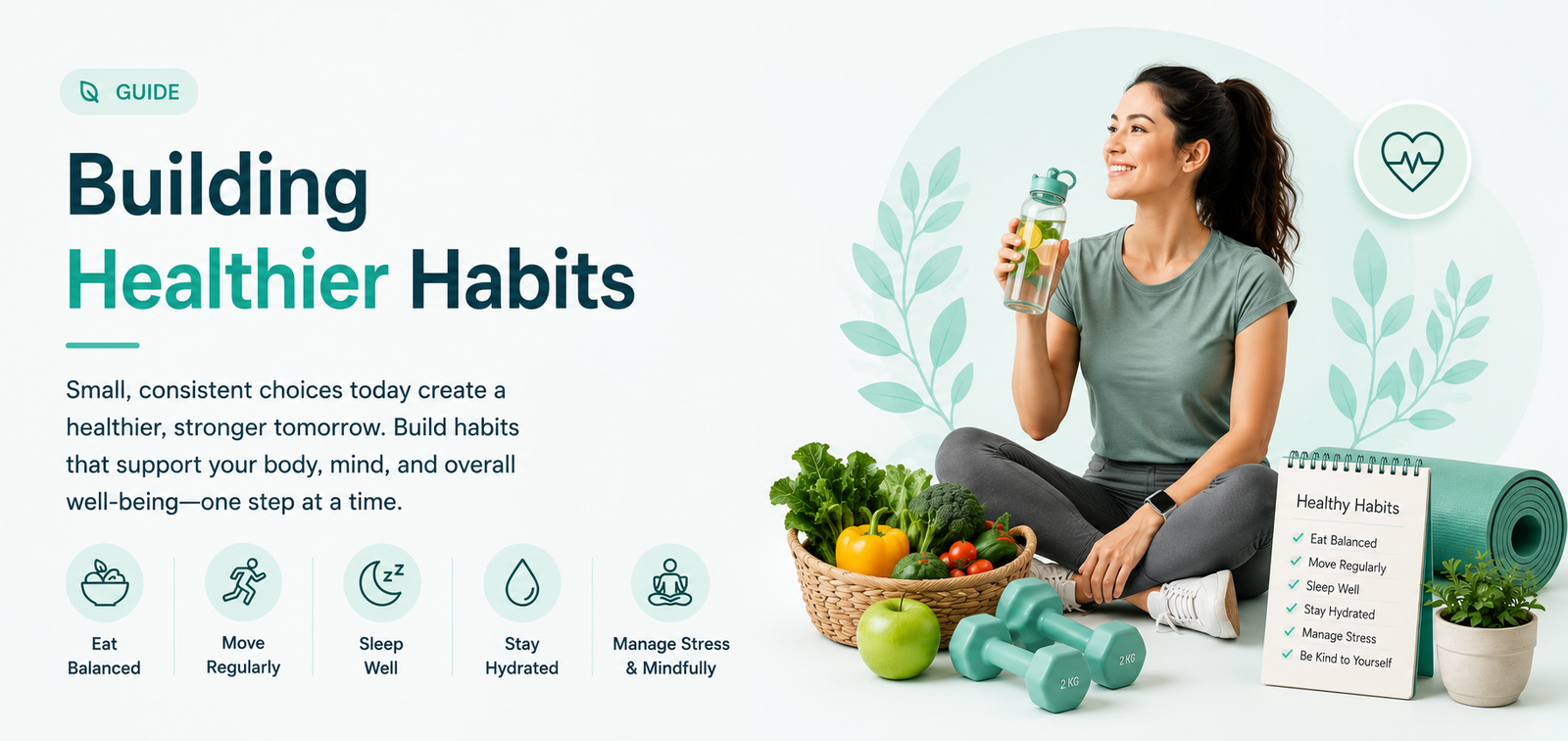
Building Healthier Habits
Health-supporting habits do not need to be perfect or complicated. A balanced eating pattern, regular movement, enough sleep, hydration and less sitting can add up when they become part of an achievable daily routine.
The foundations of a healthier routine
Balanced nutrition
Build meals around a variety of vegetables and fruit, whole grains, beans, pulses, nuts and seeds. Include suitable protein sources and choose less processed foods more often. Keep foods high in free sugars, salt and unhealthy fats as occasional choices rather than everyday staples.
Regular physical activity
Move in ways you enjoy. Walking, cycling, active travel, dancing, household tasks and planned exercise all count. WHO guidance encourages adults to do regular moderate or vigorous activity and include muscle-strengthening activities; begin at a level that feels manageable and increase gradually.
Quality sleep
Protect a regular sleep schedule and create a calming wind-down routine. A darker, quieter sleeping space and less bright-screen time before bed may help you make sleep a consistent part of your day.
Hydration
Drink water regularly and keep a bottle nearby when helpful. Needs vary with weather, activity and personal circumstances, so use thirst and your routine as practical guides rather than chasing a rigid target.
Reduce sedentary time
Break up long periods of sitting with brief movement. Stand during a phone call, walk while taking a break, stretch between tasks or choose stairs when practical. Light movement throughout the day is a useful complement to planned exercise.
Sustainable daily routines
Link a new habit to something you already do, prepare simple options in advance and make the healthier choice easy to reach. A routine that works on ordinary busy days is more valuable than a plan that only works under ideal conditions.
Make change realistic
Small actions can be easier to repeat than dramatic overhauls. Set a specific goal, decide when and where it will happen, and give yourself room to adjust. If a day does not go to plan, resume at the next opportunity instead of treating it as failure.
- Add one piece of fruit to breakfast or choose vegetables with lunch.
- Take a ten-minute walk after one meal and extend it when it feels comfortable.
- Set a reminder to stand and move for a few minutes during a long work session.
- Choose a regular time to begin winding down for sleep.
- Keep water within reach and refill it during normal breaks.
Use goals and self-monitoring
Turn a broad intention into a clear, manageable action. For example, “I will walk for ten minutes after lunch on Monday, Wednesday and Friday” is easier to track than “I will exercise more.” A simple note, calendar mark or habit tracker can show patterns, highlight progress and help you make realistic adjustments.
Plan
Choose one behaviour, a small first step and a cue that will remind you.
Notice
Record what you do without judgement, including what made it easier or harder.
Adjust
Reduce the step, change the timing or prepare differently when your plan is not fitting your life.
Build
Increase duration, frequency or variety only after the basic habit feels steady.
Progress over perfection
Healthy routines are personal and can change with work, family, weather, energy and access to food or safe places to move. Focus on consistency across weeks, not an all-or-nothing standard for one day. Avoid extreme diets, exhausting schedules and promises of instant results; gradual changes are more likely to last.